A reverse osmosis system is one of the most effective ways to get clean, great-tasting drinking water at home. When it’s working properly, you don’t think about it. You just turn on the tap and trust what comes out.
But like any water system, it requires regular maintenance to keep doing its job.
For homeowners in Lehigh Acres, Fort Myers, Alva, and LaBelle, small changes in your water are often the first sign something isn’t right. And if those signs are ignored, your system can quietly lose effectiveness over time.
This guide will help you recognize when your reverse osmosis system needs maintenance, and what to do next.
How a Reverse Osmosis System Starts to Decline Over Time
Reverse osmosis systems work through multiple filtration stages, including pre-filters, a semi-permeable membrane, and post-filters that polish the water before it reaches your faucet.
Each of these components has a lifespan.
As filters become saturated and membranes wear down, the system doesn’t suddenly fail. Instead, performance gradually declines. Water quality drops, flow slows, and contaminants may begin slipping through.
This slow decline is why many homeowners don’t realize there’s a problem until the system is significantly overdue for service.
According to the U.S. Environmental Protection Agency, point-of-use filtration systems require regular maintenance to remain effective, especially in areas with higher mineral content or well water conditions.
Source: https://www.epa.gov/ground-water-and-drinking-water/home-drinking-water-filtration-fact-sheet
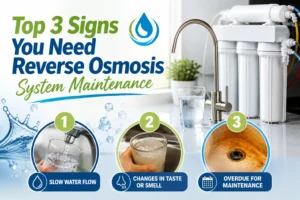
1. Changes in Taste
One of the most reliable indicators of a maintenance issue is a change in how your water tastes.
Water that once tasted clean and neutral may begin to taste metallic, flat, or slightly unpleasant. In some cases, homeowners describe it as “not as crisp” as it used to be.
This typically points to exhausted carbon filters or a membrane that is no longer removing dissolved solids effectively.
Because taste is subjective, it is easy to overlook at first. But if you find yourself reaching for bottled water more often, your system is likely due for service.
2. Slow Water Flow
If your reverse osmosis faucet has slowed down, there is a reason.
Reduced flow is usually caused by clogged filters, mineral buildup, or a membrane that is nearing the end of its lifespan. In Southwest Florida, where water conditions often include higher mineral content, this can happen sooner than expected.
A properly functioning system should fill a glass steadily. If it feels like it’s taking longer every week, that is not normal wear. It is a maintenance signal.
The key here is timing. Addressing slow flow early is typically a simple fix. Waiting too long can lead to more extensive system wear.
3. Unusual Smells
Clean drinking water should not have a noticeable odor.
If the water coming from your reverse osmosis system develops a musty, sulfur-like, or chemical smell, it can indicate bacterial growth within old filters or a failure in one of the filtration stages.
This is especially important for homes on well water, where untreated contaminants can place additional strain on filtration systems.
The Centers for Disease Control and Prevention emphasizes that improperly maintained filtration systems can become a source of contamination rather than protection.
Source: https://www.cdc.gov/healthywater/drinking/home-water-treatment/index.html
If your water smells off, it is worth addressing right away rather than assuming it will resolve on its own.
Time-Based Maintenance Matters More Than Symptoms
One of the most common misconceptions about reverse osmosis system maintenance is that you only need to service your system when something seems wrong.
In reality, reverse osmosis maintenance is largely time-based.
Most systems require:
- Pre-filter changes every 6 to 12 months
- Membrane replacement approximately every 2 to 3 years
- Periodic system checks to ensure proper pressure and performance
Even if your water seems fine, these components wear down behind the scenes.
Waiting for a noticeable problem often means you are already past the optimal maintenance window.
Subtle System Behaviors That Indicate a Problem
Some of the most important warning signs of a need for reverse osmosis system maintenance are easy to overlook because they do not directly affect taste or appearance right away.
You might notice the system running more frequently than usual, a constant draining sound, or occasional cloudy water that clears after a few seconds.
These can point to pressure imbalances, internal leaks, or inefficiencies that reduce the system’s overall effectiveness.
While they may seem minor, they often indicate that the system is working harder than it should to produce the same result.
Insight: A Working System Is Not Always a Healthy System
Here’s where many homeowners get tripped up.
If water is still coming out of the faucet, it feels like everything is fine.
But reverse osmosis systems are designed to continue operating even as performance declines. That means you can have a system that appears functional while quietly allowing more contaminants through.
This is why regular maintenance is not just about convenience. It is about maintaining the level of protection you installed the system for in the first place.
What to Do If You Notice These Signs
If you are seeing one or more of these indicators, you have two options.
Option A is to continue using the system and hope the issue remains minor. This usually leads to reduced water quality and higher repair costs later.
Option B is to have the system inspected, serviced, and brought back to optimal performance now.
In most cases, maintenance is straightforward when handled early. It becomes more complex only when problems are ignored.
Keep Your Reverse Osmosis System Performing the Way It Should
At PUR Home Services, we help homeowners keep their reverse osmosis systems clean, efficient, and reliable.
We focus on simple, practical solutions that match your home and your water conditions. No over-complication, no pressure, just clear answers and dependable service.
If your system is showing signs of wear, or if it has simply been a while since your last service, it may be time to take a closer look.
👉 Schedule your reverse osmosis maintenance today and get back to water you can trust.
Frequently Asked Questions
How often should a reverse osmosis system be serviced?
Most systems should be checked annually, with filters replaced every 6 to 12 months and membranes every 2 to 3 years, depending on water quality and usage.
What happens if I don’t maintain my RO system?
Performance gradually declines, which can lead to poor taste, reduced filtration, and potential contamination inside the system.
Why is my reverse osmosis water coming out slowly?
This is usually caused by clogged filters, membrane wear, or mineral buildup restricting water flow.
Is cloudy reverse osmosis water a problem?
Occasional cloudiness that clears quickly can be air, but frequent cloudiness may indicate inefficiencies or maintenance needs.
Can a reverse osmosis system grow bacteria?
Yes, if filters are not replaced regularly, bacteria can develop inside the system, reducing water quality.
Do I need maintenance if my water still tastes fine?
Yes. Many issues develop before they affect taste, which is why time-based maintenance is important.